
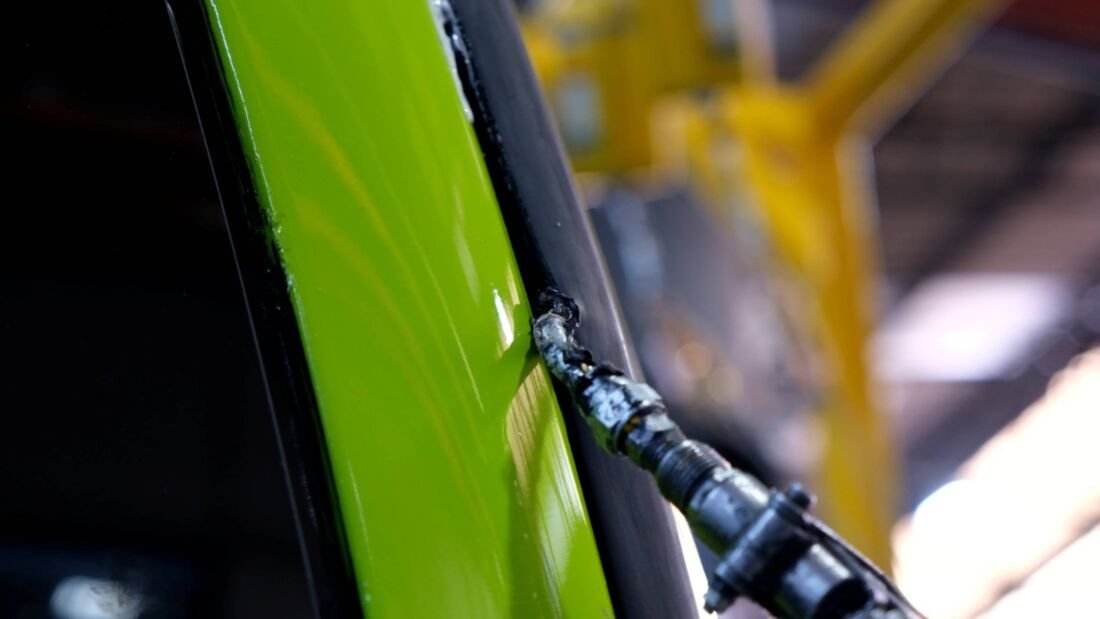
Marcopolo has received its first green patent for developing the Hefesto Compound, an innovative technology used as a sealing material in the manufacture of its buses. The solution replaces conventional inputs with an alternative developed by repurposing industrial waste and incorporating silica derived from rice husks, a renewable raw material.

Developed in partnership with the SENAI Institute of Innovation in Polymers (ISI Polymers) and Ciaflex, the solution is the result of a project carried out between 2024 and 2025. The initiative was supported by the Brazilian Industrial Research and Innovation Company (Embrapii) and brought together research, technological development, and environmental commitment to create an alternative that reduces waste, expands material circularity, and decreases dependence on fossil-based raw materials.
“The Hefesto Compound was born from the search for a more sustainable destination for the waste generated in our production process. We were able to turn this challenge into an innovative solution that combines material repurposing, the use of renewable raw materials, and technical performance. Receiving Marcopolo’s first green patent is an important recognition of this work and of our sustainable innovation strategy,” says Felipe Biondo, Marcopolo’s Product Reliability Coordinator.
The innovation has delivered tangible results. Studies conducted during the development process showed a reduction of more than 50% in the greenhouse gas emissions associated with the material, decreasing from approximately 1.7 metric tons to about 831 kilograms of CO₂ equivalent. The solution also reduced the consumption of fossil-based resources used in the product’s composition by more than 50%.
Another significant benefit is related to the circular economy. Thanks to the repurposing enabled by the new technology, approximately two metric tons of waste per year can be diverted from industrial landfills. In just one of the production lines evaluated, the initiative has the potential to eliminate approximately R$ 27 thousand per year in costs associated with the disposal of these materials.