
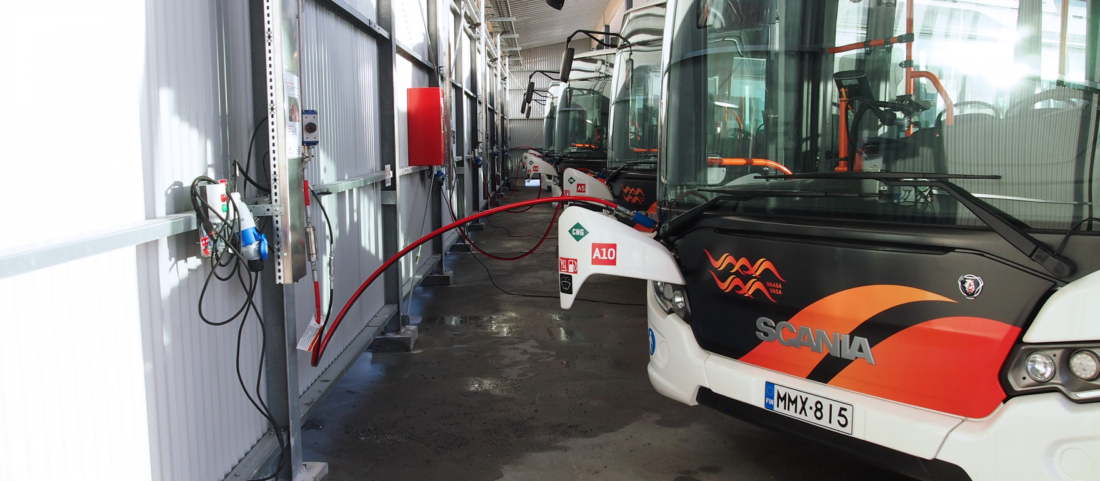
“The fuel used by these buses will annually replace some 280,000 litres of diesel fuel. The CO2 emissions are on the same level as those of electric vehicles using electricity produced by wind power,” says Pertti Hällilä, who is responsible for the biogas bus project. Biological waste from households in the Vaasa region and sludge from Stormossen are processed into biogas for approximately 1,000 cars – and the buses, a press release from Scania says. According to Hällilä the past year has run smoothly. “We initially expected a bumpy ride but we have not experienced any major setbacks and all problems have been very mundane,” he says.
The number of passengers has increased
Even the below-freezing temperatures down to -23° during winter did not slow down the operation. With the exception of a few brief outages of the filling station, biogas has been used as fuel throughout the year, and the target of 700,000 total kilometres has been reached. “These buses are professional tools. We do not carry out any testing or product development here. This is purely professional driving and, simultaneously, we are addressing environmental issues,” explains Hällillä.
At the beginning of the project, the average consumption of gas buses was calculated to be around 60 Nm3/100 km. During the first year of operation, Scania’s engines have proven to be much more energy efficient, Scania point out in the press release. This has enabled Vaasa to increase the number of buses running on Saturdays and to operate city route 4 during the summer season, which previously only was in service during winter. The number of passengers has increased to 1.2 million, an increase of 20 percent in a few years. The high utilisation rate of biogas vehicles will help bring Vaasa one step closer to fulfilling its environmental targets. The locally-produced methane for the biogas buses would normally either been used for heating or flared as waste and can now gainfully serve as transport fuel.
Scania buses are fuelled with biogas also in UK, where Bristol Community Transport has invested in a fleet of 21 Scania biogas buses built with Alexander Dennis bodywork. They will be deployed on m1 Metrobus route, which will be operated by First West. At IAA 2018 the manufacturer showcased the first coach in the world fuelled with gas (LNG, to be precise).
Drivers trained to drive biogas fuelled buses
In selecting biogas buses, Vaasa looked at the bigger picture. “In comparison with diesel- powered buses with comprehensive maintenance contracts, biogas is slightly more expensive. However, factoring in the price stability of locally produced biogas changed the calculation. Now we don’t any longer have to worry as much about price fluctuations since the price remains stable and with local production, our fuel supply will always be assured,” says Hällillä. The schedule for introductory driver training early 2017 was tight. Driver coaching, which was included in the biogas sales deal, has since continued over the past year. “Driver coaching has focused on improving operational safety and quality,” says Erno Sirviö, Driver Training Manager at Scania Suomi.
“For example, we have been able to reduce the amount of hard braking, which is critical to the customer experience, by more than 35 percent. Economical, anticipatory and safe driving methods have contributed to improved fuel-efficiency. With trained drivers we’ve also been able to increase average travel speeds, keeping buses better on schedule.”