
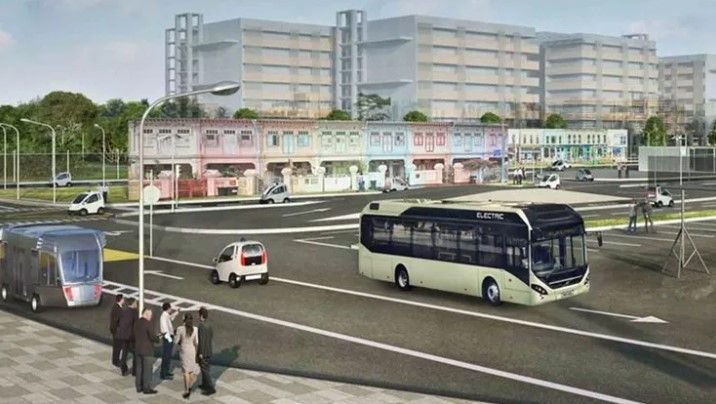
Singapore may be the second smallest country in Asia, but it is a leading nation in the region when it comes to technological development. It is investing heavily in automation and electro mobility to increase the use of public transport and to make the systems safer and more efficient.
Currently, 67% of journeys during peak hours are made on public transport, and the goal is to increase this to 75% by 2030. Given the constraints which Singapore faces in land and labour, the country is focusing on automation to achieve its objective.
Manish Sahi, Head of Volvo Buses Singapore, collaborated with NTU to understand the value of having Volvo on board as a major partner in the autonomous electric bus project.
The next step
The next step is to demonstrate how the buses operate and to carry out more research, together with NTU, into how to prepare the buses for use on public roads. The fact that the buses are not only autonomous but also electric plays an important role in being more environmentally friendly.
The new technology allows public transport to be planned more effectively, which will lead to a reduction in congestion and a quieter, greener and safer transport system.
“The developments in the automated technology are helping progress towards Singapore’s vision of deploying AV technology for public transport,” explains Manish.
“But the technology is not yet ready to be commercialised. We need to carry out further tests to show that it is safe for passengers to use the buses on public roads.”