
The European Automobile Manufacturers’ Association (ACEA) has urged the European Union to take immediate action to protect its bus manufacturing industry, as Chinese brands captured 32% of the European electric city bus market in 2025. With the EU bus trade deficit rising to €2.9 billion, the association is calling for stronger public procurement policies, greater European industrial value creation and measures to safeguard the competitiveness of European bus manufacturers.
- Chinese Electric Bus Manufacturers Reach 32% Market Share in Europe
- European Bus Registrations Rise 22.7% in First Half of 2026
- ACEA Calls for Changes to EU Public Procurement Rules
- European Bus Manufacturing Faces Industrial Competitiveness Challenges
- Electric Bus Transition Increases Pressure on European Manufacturers
The European Automobile Manufacturers’ Association (ACEA) has published a new position paper highlighting growing competitive pressures on Europe’s bus manufacturing industry. Released on October 21, 2026, the document, titled “Bus Manufacturing in Europe – Urgent Action Needed”, outlines policy recommendations aimed at strengthening European production and ensuring fair competition in the rapidly expanding electric bus market.
ACEA warns that the increasing market presence of Chinese electric bus manufacturers, combined with a widening EU bus trade deficit, poses significant challenges for European manufacturers. The association is urging EU policymakers to introduce targeted measures before major public transport fleet renewal contracts are awarded ahead of 2030.
Chinese Electric Bus Manufacturers Reach 32% Market Share in Europe
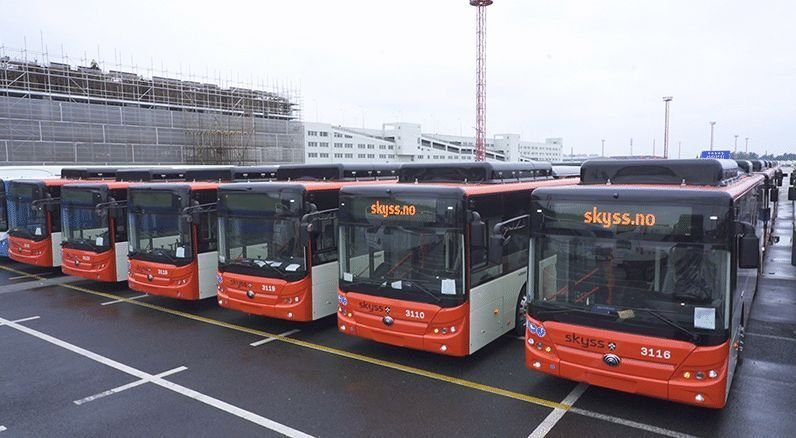
According to ACEA, Chinese brands accounted for 32% of the European electric city bus market in 2025, highlighting their growing presence in the region’s transition toward zero-emission public transportation.
The association also reports that the EU bus trade deficit has increased to €2.9 billion, raising concerns about the competitiveness of European bus manufacturing and the long-term sustainability of domestic production.
ACEA argues that European industrial policy must respond to these developments by strengthening local manufacturing capabilities and ensuring that public investments in electric mobility contribute to European industrial value creation.
European Bus Registrations Rise 22.7% in First Half of 2026
Despite growing international competition, the European bus market continued to expand during the first six months of 2026. ACEA reports that new EU bus registrations increased by 22.7%, reaching 22,590 units.
The transition to electric mobility is particularly evident in the city bus segment, where approximately 60% of newly registered vehicles are now battery-electric. This development reflects the increasing importance of zero-emission buses in European public transport fleets.
ACEA highlights the role of public procurement, public funding, the Clean Vehicles Directive and European CO2 emission standards in accelerating the adoption of electric buses across the European Union.
ACEA Calls for Changes to EU Public Procurement Rules
One of the central recommendations in ACEA’s position paper concerns the reform of European public procurement policies. The association argues that procurement frameworks should better support European industrial competitiveness and value creation.
ACEA is calling for changes to the Industrial Accelerator Act and EU procurement rules to ensure that public investments in bus fleet electrification also strengthen Europe’s manufacturing base.
With major fleet renewal contracts expected before 2030, the association emphasizes the urgency of introducing new measures to address competitive pressures and support European bus manufacturers.
European Bus Manufacturing Faces Industrial Competitiveness Challenges
ACEA’s position paper identifies European industrial value creation, production planning and international competitiveness as key priorities for the future of the region’s bus manufacturing industry.
The association is seeking a policy framework that supports European manufacturers as demand for battery-electric buses continues to grow. Production planning is particularly important as manufacturers prepare for future fleet renewal programmes and changing market requirements.
ACEA also includes cybersecurity among its policy priorities, reflecting the increasing importance of digital security considerations in modern bus manufacturing and public transport operations.
Electric Bus Transition Increases Pressure on European Manufacturers
The rapid electrification of Europe’s city bus fleets is creating new opportunities for manufacturers while intensifying international competition. With battery-electric vehicles accounting for approximately 60% of new city bus registrations, the transition is reshaping the European bus market.
ACEA’s latest position paper underlines the importance of aligning environmental objectives with industrial competitiveness. The association wants EU policymakers to ensure that the transition toward zero-emission public transport also supports European manufacturing and long-term industrial development.
The recommendations come at a critical time for the industry, as public transport authorities prepare future fleet investments and manufacturers adapt their production strategies to meet increasingly ambitious electrification requirements.